The Role of Draft Angle in Mold Performance
In the design of a Plastic Commodity Mold, draft angle optimization is one of the effective ways to achieve faster demolding and shorter production cycles. Without a sufficient draft, excessive friction forms between the plastic part and mold surface, increasing ejection force, causing scratches, deformation, or even part sticking. Therefore, rational draft design directly determines molding efficiency, surface quality, and long-term mold durability.
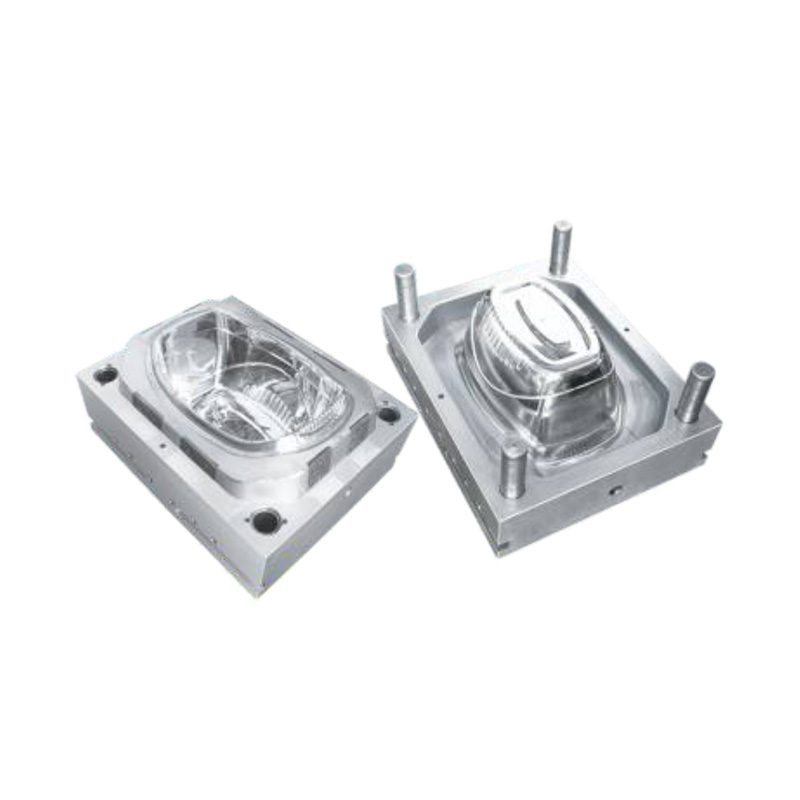
1. Determining the Appropriate Draft Angle
Material-Based Optimization
- Different thermoplastics behave differently during cooling and shrinkage.
- Materials with high shrinkage rates (such as polypropylene) naturally pull away from the cavity wall, allowing relatively smaller draft angles.
- Low-shrinkage materials (such as ABS or polycarbonate) require slightly larger draft angles to prevent sticking.
- Fiber-filled materials increase friction against the mold wall, often requiring an additional 0.5°–1° draft to ensure smooth release.
Surface Finish Considerations
- The mold surface condition greatly affects demolding resistance.
- Highly polished surfaces reduce friction and may function well with smaller draft angles.
- Textured or etched surfaces require larger draft angles because micro-patterns increase surface contact.
- Deep textures or matte finishes often require at least 2°–3° to avoid drag marks.
Part Geometry and Depth Factors
- The deeper the cavity, the greater the contact area between the part and the mold.
- Tall ribs and bosses need independent draft angles to prevent tearing or whitening.
- Deep box-shaped structures require a progressive taper design to reduce the vacuum effect.
- Uniform wall thickness supports even shrinkage, reducing resistance during release.
2. Structural Design Adjustments for Faster Release
Balanced Core and Cavity Draft Distribution
- Applying the draft to both the core and cavity improves stress balance.
- Slightly increasing the draft on the core side often improves demolding efficiency because inner surfaces create a stronger holding force.
- Balanced taper reduces uneven pulling forces that may distort thin walls.
- Avoid designing one side completely vertical while relying on the opposite side for release.
Optimizing Rib and Reinforcement Design
- Ribs are common in commodity plastic products for strength enhancement.
- Each rib should include at least 0.5° draft per side.
- Deeper ribs require proportionally greater taper.
- Rounded transitions between ribs and walls reduce stress concentration and help the part slide out more easily.
Minimizing Undercuts and Reverse Angles
- Undercuts significantly complicate demolding.
- Simplify geometry to eliminate unnecessary reverse structures whenever possible.
- If side actions are unavoidable, ensure accurate slider alignment and smooth withdrawal timing.
- Reduce sharp corners that can mechanically lock the part inside the cavity.
3. Improving Ejection Efficiency Alongside Draft
Optimizing Ejector System Layout
- Draft angle works in combination with the ejection system.
- Even distribution of ejector pins prevents localized deformation.
- Large flat surfaces may benefit from ejector plates instead of concentrated pin force.
- Synchronizing ejection speed with mold opening prevents sudden stress.
Cooling System Coordination
- Uniform cooling directly affects shrinkage and demolding force.
- Balanced cooling channels reduce uneven contraction.
- Avoid overcooling core areas, which may increase part grip.
- Proper temperature control shortens cycle time while maintaining dimensional accuracy.
Surface Treatments to Reduce Friction
- Surface engineering enhances draft performance.
- Nitriding or hard chrome plating improves wear resistance.
- Low-friction coatings reduce adhesion between plastic and steel.
- Smooth maintenance practices preserve surface integrity over long production runs.
4. Validation and Continuous Improvement
Simulation and Mold Flow Analysis
- Digital analysis helps predict potential sticking areas.
- Evaluate the shrinkage distribution before manufacturing.
- Identify high-pressure zones that may require additional taper.
- Adjust design parameters early to avoid costly revisions.
Trial Production Testing
- Initial mold trials reveal real demolding behavior.
- Monitor ejection force and surface marks.
- Compare cycle times before and after draft optimization.
- Make incremental adjustments rather than drastic changes.
Long-Term Monitoring and Maintenance
- Stable demolding depends on consistent mold conditions.
- Regularly inspect cavity wear patterns.
- Re-polish high-fricen necesario.
- Record production data to guide future design improvements.
Through systematic design validation and ongoing refinement, a well-engineered Plastic Commodity Mold can achieve faster release, higher efficiency, and improved overall manufacturing performance.
 English
 中文简体
中文简体